Back
The Longtail Problem in Lifestyle Wholesale
Why most retail partners never reach their full potential
Apr 24, 2026
What the longtail means in wholesale sales
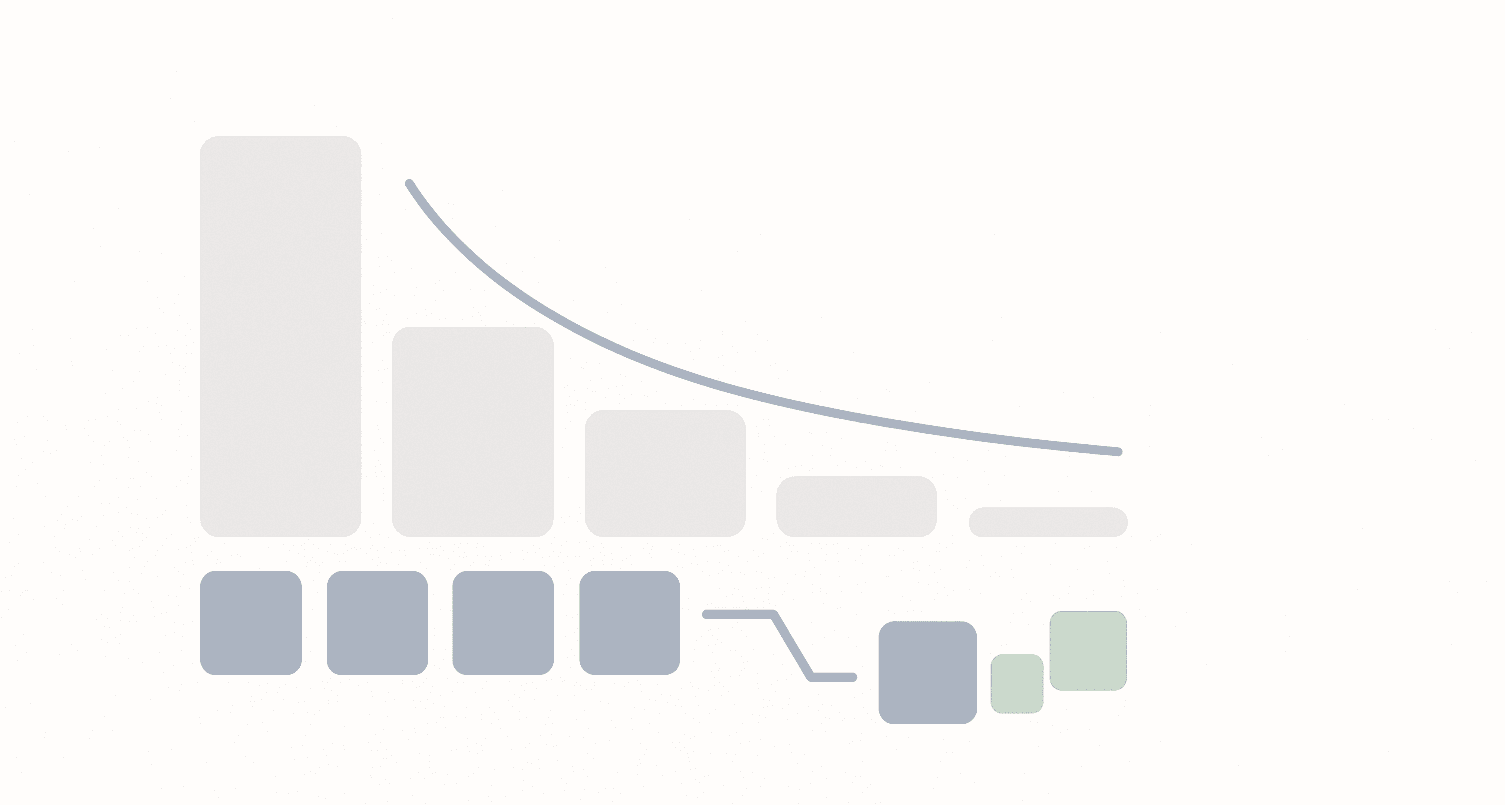
In most lifestyle wholesale businesses, retail partners fall into two groups. A small group of top partners generates a large share of revenue. A much larger group of smaller partners orders infrequently and receives less attention.
This second group is the longtail.
Individually, longtail partners may seem less important. Collectively, they often represent meaningful growth potential that remains underdeveloped.
Why the longtail is hard to manage
The longtail problem is not caused by lack of interest from retail partners. It is caused by lack of structure on the brand side.
Sales teams have limited time. They naturally focus on partners where the return feels highest and most predictable. Smaller partners require more coordination, more follow-up, and more context switching.
Without a clear process, attention flows to the top accounts while the longtail becomes reactive.
How the longtail becomes invisible
Many wholesale sales systems treat retail partners as equally active as long as they exist in a database. This creates a false sense of stability.
A longtail partner may still be marked as active while their stock runs out, their last reorder is overdue, or their campaigns never go live. These issues rarely trigger alarms.
As a result, underperformance in the longtail often goes unnoticed.
The hidden cost of ignoring the longtail
The cost of the longtail problem is not obvious in day-to-day reporting. It shows up over time as missed reorders, slower growth, and uneven performance across the retail network.
Small improvements across many partners can add up to significant revenue. When these opportunities are missed, brands often compensate by onboarding new partners instead of improving existing ones.
This increases complexity without fixing the underlying issue.
Why manual follow-up does not scale
Managing the longtail manually depends on individual memory and effort. Sales reps keep mental lists, spreadsheets, or reminders to track which partners need attention.
This approach breaks down as networks grow. Follow-ups are delayed. Priorities become unclear. Longtail partners only order when something breaks or when they reach out themselves.
Manual execution turns the longtail into a support function instead of a growth opportunity.
How order-focused execution changes longtail performance
The longtail becomes manageable when sales teams shift focus from relationships to order behavior.
When follow-ups are triggered by stock levels, reorder timing, or campaign activation, smaller partners receive attention at the right moment. Performance becomes visible. Underordering becomes measurable.
This allows sales teams to activate the longtail without treating every partner as a key account.
Why the longtail matters more as brands scale
As lifestyle brands grow, the number of retail partners increases faster than sales capacity. The longtail expands with every new account.
Without a way to manage this group systematically, growth becomes increasingly dependent on a few top partners. This concentration increases risk and limits upside.
Activating the longtail creates a more resilient and balanced wholesale business.
What strong longtail management looks like
Strong longtail management does not mean more meetings or more manual work. It means having visibility into which partners should reorder, which are underperforming, and where small actions can unlock value.
When sales teams have this visibility, the longtail becomes a predictable contributor instead of an afterthought.
Turning the longtail into growth partners
The longtail problem is structural, not personal. Sales teams are not failing. They are operating without the right support.
When wholesale execution is built around order flow and partner behavior, the longtail becomes easier to manage and easier to grow. That shift turns a hidden problem into a durable growth lever.
Want the full picture?
Read our complete guide to wholesale execution for lifestyle brands. A practical breakdown of how modern brands run wholesale without spreadsheets, guesswork, or constant follow-ups.

Casper Brix
Co-founder
Casper Brix is the co-founder of Atlo. He draws on 7 years as Chief Purchasing Officer and commercial leadership, now helping lifestyle brands improve how they manage retail partners and grow their wholesale.
Ready to stop losing orders?
Latest posts
Discover other pieces of writing in our blog